


Choosing to pull a tooth might seem like the fastest way to stop a persistent ache, but the “cheaper” option today could actually cost you 300% more in restorative work over the next decade. When you’re facing the decision of a root canal vs extraction, the immediate price tag is only one part of the story for your long-term smile. We understand that when a sharp toothache strikes, you just want the pain to vanish. It’s natural to feel anxious about dental chairs or confused by the 2024 BC Dental Fee Guide while planning your family’s wellness budget.
Our team at Queen’s Park Dental is here to help you weigh your options with total clarity and gentle care. We’ll show you the honest pros, cons, and the true costs in C$ of saving your natural tooth versus replacing a missing one with an implant or bridge. This guide provides everything you need to make a confident, personalized decision for your oral health right here in New Westminster.
Key Takeaways
- Understand the vital differences between preserving your natural tooth structure and opting for removal to ensure your smile stays healthy for years to come.
- Compare the procedure timelines and comfort levels of a root canal vs extraction to see how modern techniques ensure a gentle, anxiety-free experience.
- Learn how to budget using the current BCDA Fee Guide and discover why the “hidden costs” of tooth replacement can make saving a tooth more affordable long-term.
- Identify the specific clinical scenarios where an extraction is the most predictable path to protecting your overall wellness and oral health.
- Discover how our team’s Crown-in-a-Day technology provides a personalized and efficient restorative experience for our New Westminster dental family.
Facing a Damaged Tooth: Root Canal vs Extraction Explained
When you’re dealing with a persistent toothache or a broken tooth, deciding between a root canal vs extraction can feel overwhelming. Many patients initially feel pressured to choose an extraction because it seems like a quick fix for the pain. However, our team at Queen’s Park Dental wants you to understand the long term impact of each choice. We believe in providing you with all the information needed to make a confident decision for your oral health.
A root canal is a restorative procedure designed to save your natural tooth by cleaning out the internal infection. In contrast, an extraction involves the complete removal of both the tooth and its root. We prioritize your comfort above all else, ensuring every visit to our New Westminster office feels safe and stress-free. Our gentle approach helps lower the barriers of dental anxiety by treating you like a member of our own family.
The Goal of Root Canal Therapy
Dr. Darcy Murphy views saving your natural tooth as the gold standard of modern dentistry. During this procedure, we remove the infected or damaged pulp from the centre of the tooth. This stops the spread of bacteria to your jawbone and neighbouring teeth. By keeping your original tooth, you maintain your natural bite alignment and prevent the bone loss that often follows a missing tooth. It’s a personalized way to protect your smile’s wellness. We use modern technology to ensure the process is efficient and comfortable for every patient.
When Extraction Becomes Necessary
While we always aim to preserve your smile, certain situations make removal the healthiest option. If a tooth has a severe fracture extending below the gum line or if advanced periodontitis has destroyed the supporting bone, a root canal vs extraction debate usually leans toward the latter. Statistics from the Canadian Dental Association indicate that gum disease remains a leading cause of tooth loss for adults over 35. We treat extraction as a last resort, only recommending it when a tooth cannot be saved or poses a risk to your overall health. If we do need to remove a tooth, we’ll walk you through a tailored plan for a bridge or implant to keep your smile complete.
Root Canal vs Tooth Extraction: A Side-by-Side Comparison
Choosing between a root canal vs extraction often comes down to your long-term goals for your oral health and smile. Our team typically completes a root canal in one or two visits, with each session lasting about 90 minutes. In contrast, an extraction is a single appointment that usually takes 30 to 60 minutes. While the extraction is faster, it’s only the first step of a longer journey if you plan to replace the tooth later.
We prioritize your comfort regardless of the path you choose. Our practice uses modern local anaesthesia to ensure you don’t feel pain during these procedures. You’ll likely only feel a bit of light pressure as we work. Statistics from the Canadian Academy of Endodontics show that root canal treatments have a success rate of up to 95%. This high predictability makes it a reliable way to keep your natural smile intact without the need for bridges or implants.
Comfort and Recovery Times
Most of our patients return to their normal routine within 24 to 48 hours after a root canal. You might experience some mild sensitivity, but it’s easily managed with standard over-the-counter care. Extraction recovery requires a bit more diligence. We provide detailed instructions to help you manage the surgical site and prevent dry socket, a painful condition that affects roughly 2% to 5% of extraction patients. To help our New West patients manage dental anxiety, we offer oral sedation. This allows you to feel calm and relaxed while we provide the root canal vs extraction care you need.
Functionality and Bone Health
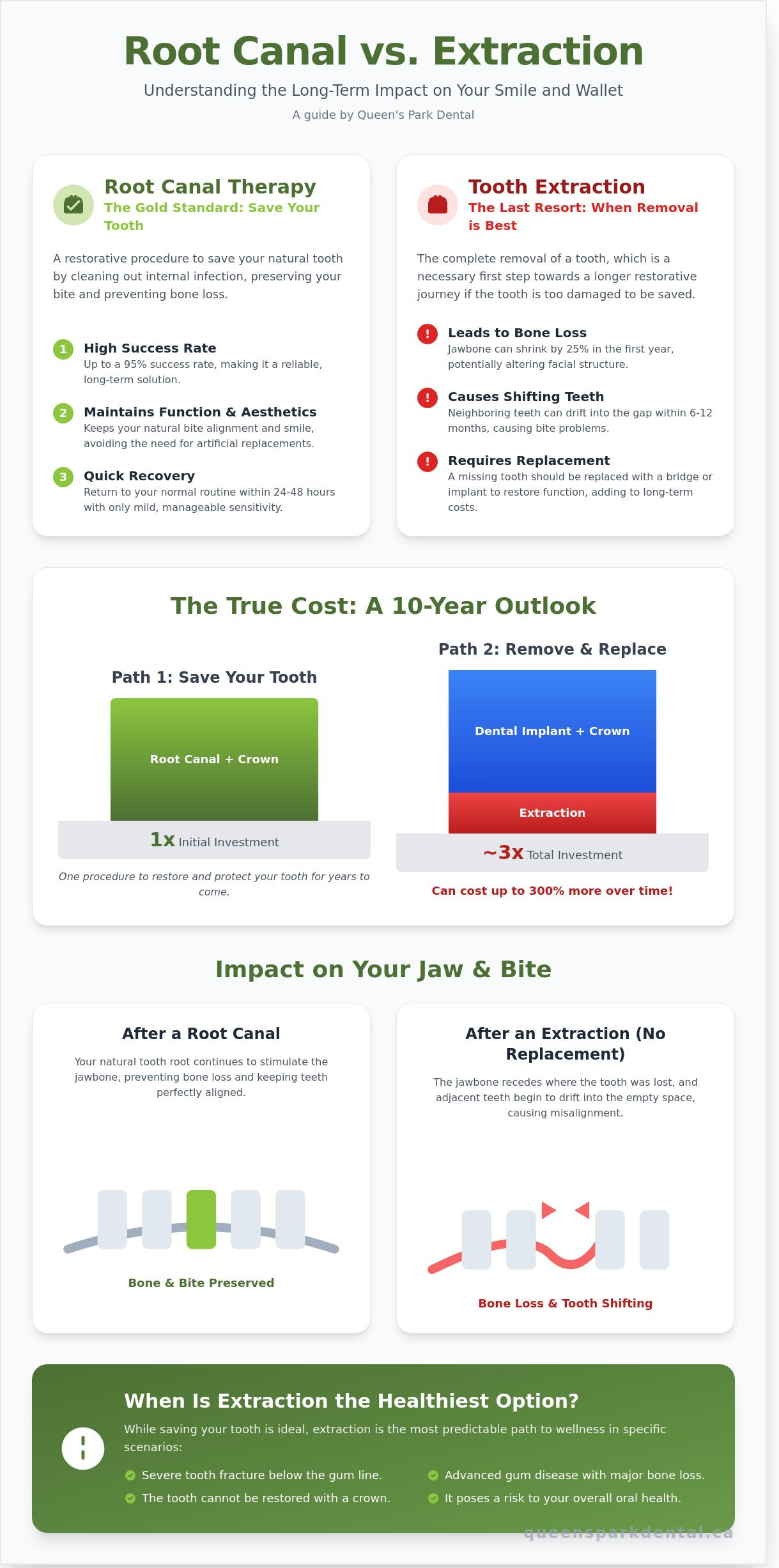
Keeping your natural tooth root is the most effective way to prevent jawbone resorption. When a tooth is removed, the surrounding bone can shrink by as much as 25% in the first year alone. This loss of bone density can eventually change your facial shape or make future implants more difficult. A full set of teeth also ensures you can continue to enjoy your favorite meals at the River Market or the Quay without worry.
If a gap is left after an extraction, your remaining teeth will naturally begin to shift toward the empty space. This movement often happens within 6 to 12 months and can lead to bite misalignment or jaw pain. You can join our dental family to receive a personalized assessment of which option best protects your long-term wellness. We focus on gentle care that keeps your bite strong and your smile aligned for years to come.
The Long-Term Reality: Cost and Recovery in the Lower Mainland
Choosing between a root canal vs extraction often comes down to the numbers on your treatment plan. We want you to feel confident in your decision, so our team provides clear estimates based on the 2024 BCDA Fee Guide. While a simple extraction might seem like the budget-friendly choice today, it’s often the most expensive path over a ten-year period. Saving your natural tooth is an investment in your future health and comfort.
Understanding the BCDA Fee Guide
Our team follows the British Columbia Dental Association’s suggested fees to ensure transparent pricing for every New Westminster family. A root canal for a front tooth typically starts around C$600, while complex molars with multiple canals can reach C$1,200 or more. Factors like the unique shape of your roots and previous dental work influence these costs. It’s helpful to check your insurance coverage; many local plans categorize root canals as “Basic Restorative” care, which often covers 80% of the cost. In contrast, surgical replacements usually fall under “Major Restorative” categories with lower coverage levels.
The Price of Replacement
An extraction in the Lower Mainland might only cost C$210 to C$450 upfront, but the financial journey doesn’t stop there. Leaving a gap leads to bone loss and shifting teeth within 6 to 12 months. To prevent these issues, you’ll need a dental implant or a bridge. A single dental implant in BC typically ranges from C$3,500 to C$5,500. When you add the initial extraction to the cost of a high-quality replacement, the total quickly triples the price of a root canal and crown. Investing in your natural smile preserves your jawbone and maintains your social confidence for decades.
- Maintenance: Natural teeth only require your standard gentle brushing and flossing routine.
- Durability: A successful root canal can last a lifetime with proper care, whereas bridges often need replacement every 10 to 15 years.
- Function: Keeping your tooth avoids the 25% decrease in biting force often associated with removable dentures.
We’ve seen that patients who choose to save their teeth often experience less discomfort and fewer follow-up appointments over the long run. Our goal is to provide personalized care that fits your family’s budget and wellness goals. By choosing to keep your natural tooth, you’re opting for the most predictable and cost-effective outcome for your smile’s longevity.
When is Extraction the Right Choice for Your Oral Health?
While our team always strives to preserve your natural smile, we occasionally encounter clinical scenarios where a root canal is no longer a predictable option. When you are weighing the choice of a root canal vs extraction, we focus on the long-term success of your treatment. If a tooth is deemed hopeless, it means the structural damage or infection is too severe to fix reliably. In these cases, removing the tooth is actually a protective measure for your overall wellness. It prevents the spread of bacteria to your jawbone and neighbouring teeth, which helps maintain the foundation of your smile.
To give you the most accurate advice, we use high-resolution digital X-rays and iTero scanning technology. These tools allow us to see the internal state of your tooth and the surrounding bone in 3D. This precision ensures that any recommendation we make is based on clear evidence. We want you to feel confident and informed, so we walk you through these images during your visit to show you exactly what we see.
Severe Decay and Structural Integrity
For a dental crown to succeed after a root canal, we need enough healthy tooth structure to hold it in place. If decay has reached deep below the gumline, there might not be enough “grip” for a restoration. Vertical root fractures are another common reason for extraction. These fractures are often called the silent killer of teeth because they can be difficult to detect without advanced imaging. Once a root is split vertically, the tooth cannot be saved, and keeping it often leads to a 70% higher risk of localized bone loss.
Orthodontic and Financial Considerations
Sometimes, an extraction is a strategic choice for your future smile. For our patients in New Westminster considering Invisalign, removing a severely crowded or poorly positioned tooth can create the necessary room for proper alignment. We also realize that every family has a budget. While a simple extraction in British Columbia typically costs between C$160 and C$350, we look at the big picture. We provide honest, pressure-free consultations to help you balance immediate financial needs with the long-term costs of tooth replacement options like bridges or implants. Our goal is to find a personalized plan that fits your life and your health.
Gentle Dental Care at New West Quay: Your Personalised Path
Deciding between a root canal vs extraction is a significant choice that affects your health for years to come. At Queen’s Park Dental, we believe your comfort is just as important as the clinical outcome. Dr. Darcy Murphy leads our practice with a clear philosophy: we treat people, not just teeth. We know that dental visits can cause stress for many patients. Our team focuses on creating a supportive, neighborly environment where your concerns are heard. Whether you live in the heart of New Westminster or are visiting from Burnaby, we ensure your treatment plan fits your life.
Modern Technology for a Better Experience
We’ve equipped our new Quayside facility with advanced tools to make your care faster and more predictable. If saving your tooth is the goal, our Crown-in-a-Day technology is a game changer. This system allows us to design, create, and fit a permanent restoration in a single visit. You won’t have to wear a temporary cap or return for multiple appointments. For situations where a gentle tooth removal is the healthier choice, we use digital diagnostics to plan the procedure with extreme precision. This accuracy leads to less downtime and a smoother recovery process. Our modern office at the Quay provides a peaceful setting that helps lower anxiety the moment you arrive.
Join Our Dental Family
Our practice has served the local community for 40 years, building a reputation for integrity and wellness. Residents from Coquitlam to New Westminster trust us because we value long-term relationships over quick fixes. We want you to feel like part of our family, not just another chart. Choosing between a root canal vs extraction doesn’t have to be a stressful experience when you have an approachable expert by your side. We offer several ways to help you feel at ease:
- Personalized Consultations: We explain every step of your care in plain English.
- Anxiety-Reduced Environment: Our staff is trained to support patients who feel nervous about dental work.
- Convenient Quayside Location: Easy access and a welcoming atmosphere for busy families.
Your smile is an investment in your confidence and your health. If you’re ready to discuss your options, we’re here to help you make an informed decision. Contact our Quayside office today to book your consultation. We look forward to helping you achieve a healthy, beautiful smile in a setting where you truly feel at home.
Take the Next Step Toward Lasting Oral Health
Deciding between a root canal vs extraction doesn’t have to be a stressful experience. While preserving your natural tooth is often the best way to maintain your jaw structure, sometimes a gentle extraction is the most effective path to stop pain and prevent infection. At Queen’s Park Dental, we’ve provided compassionate care to New Westminster families for over 40 years. We understand that every smile is different, which is why Dr. Darcy Murphy offers personalized treatment plans tailored to your specific needs.
Our office utilizes modern Crown-in-a-Day technology to make your restorative care as convenient and comfortable as possible. We prioritize your comfort and peace of mind, ensuring you feel like part of our dental family from the moment you walk through our doors. Whether you’re looking to save a damaged tooth or need a fresh start, our team is ready to guide you with clinical expertise and a gentle touch. We’ll walk you through the costs and recovery expectations for the Lower Mainland so there aren’t any surprises.
Book your gentle consultation at Queen’s Park Dental today to explore your options and regain your confidence. We’re excited to help you achieve the healthy, beautiful smile you deserve.
Frequently Asked Questions
Is a root canal more painful than a tooth extraction?
A root canal isn’t more painful than an extraction; it’s actually the procedure that stops your toothache. Our team uses local anesthetics to ensure you feel nothing but slight pressure during the treatment. While an extraction involves removing the entire tooth and requires a recovery period for the socket to heal, most patients find root canal recovery much faster. Statistics from the Canadian Association of Endodontists show that patients who’ve had root canals are 6 times more likely to describe it as painless than those who haven’t.
How much does a root canal cost in New Westminster compared to extraction?
An extraction in New Westminster typically costs between C$200 and C$500, while a root canal ranges from C$800 to C$1,500 depending on the tooth’s location and complexity. However, the long-term cost of a root canal vs extraction often favors saving the tooth. Replacing a pulled tooth with a bridge or implant can cost between C$3,000 and C$5,000 later on. We’ll provide a personalized estimate so you can plan for your family’s budget with confidence.
What happens if I just leave a gap after an extraction?
Leaving a gap after an extraction causes your surrounding teeth to shift into the empty space, which can misalign your bite within 6 to 12 months. This shifting often leads to jaw pain or difficulty chewing. Our New Westminster patients often find that bone loss occurs in the jaw where the tooth was removed, potentially reducing bone density by 25% in the first year alone. We recommend a replacement plan to keep your smile stable and your jaw healthy.
Can a root canal fail, and what happens if it does?
Root canals have a high success rate of over 95%, but a failure can occur if the tooth has complex canal structures or a new fracture. If this happens, our team may suggest an endodontic retreatment or a small surgical procedure called an apicoectomy. We prioritize your comfort during these follow-up steps to ensure we save your natural tooth whenever possible. If the tooth can’t be saved after these efforts, we’ll discuss gentle extraction and replacement options together.
How long do I have to wait to get an implant after a tooth is pulled?
You typically wait 3 to 6 months after a tooth is pulled before getting a permanent dental implant. This period allows your jawbone to heal and go through a process called osseointegration, where the bone bonds to the site. In some specific cases, we can perform an immediate implant on the same day as the extraction. Our team will assess your bone density to create a tailored timeline that ensures your new tooth has a solid, lasting foundation.
Will my insurance cover a root canal or is extraction the only option?
Most Canadian dental insurance plans cover between 50% and 80% of both root canals and extractions. While some basic plans might lean toward extraction as a lower-cost alternative, our office staff will help you navigate your specific policy. We’ll send a pre-determination to your provider so you know exactly what C$ amount is covered before we begin your personalized care. This ensures there are no surprises when it comes to your wellness and your wallet.
Can I get a crown on the same day as my root canal at Queen’s Park Dental?
We prioritize the precision and durability that comes from our professional lab partners, so we typically place your permanent crown about 2 weeks after your root canal. After your procedure, we’ll fit you with a comfortable temporary crown to protect your tooth immediately. This ensures your final restoration fits perfectly and matches your natural smile. Our team focuses on accuracy to give you a result that lasts for 10 to 15 years or even longer.
How do I know if my tooth is too far gone to save?
A tooth is usually considered too far gone if a crack extends below the gum line or if more than 50% of the natural crown is destroyed by decay. We use digital X-rays to see exactly what’s happening beneath the surface. When deciding between a root canal vs extraction, we look for enough healthy structure to support a crown. If the root is fractured, a gentle extraction is often the safest path for your long-term oral health.