

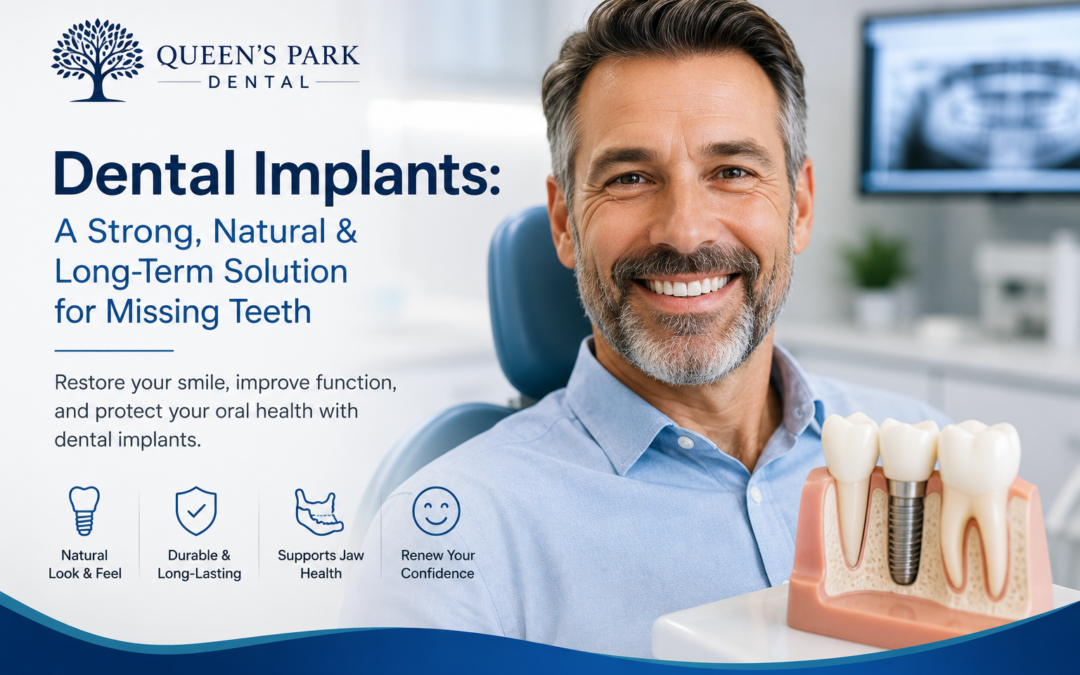
Dental Implants in New Westminster: A Long-Term Solution for Missing Teeth
Missing teeth can affect more than just the appearance of your smile. They can also change the way you chew, speak, and feel about your oral health. For many patients, dental implants offer a strong, natural-looking, and long-term solution for replacing missing teeth.
At Queen’s Park Dental in New Westminster, our dental team helps patients understand their tooth replacement options and determine whether dental implants may be the right choice for their smile.
What Are Dental Implants?
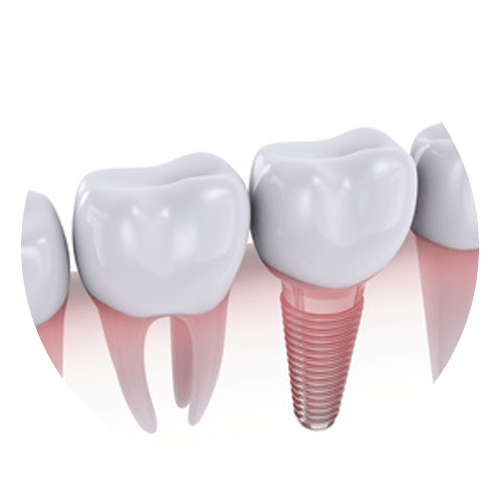
A dental implant is a small titanium post that is placed into the jawbone to act like an artificial tooth root. Once the implant has healed and bonded with the bone, it can support a dental crown, bridge, or denture. This creates a stable replacement that looks and functions much like a natural tooth.
Dental implants are commonly used to replace a single missing tooth, multiple missing teeth, or even a full arch of teeth. Because they are anchored in the jawbone, they provide excellent support and help preserve the structure of the mouth over time.
Why Replacing Missing Teeth Is Important
When a tooth is lost, the surrounding teeth may begin to shift into the empty space. This can affect your bite, create difficulty cleaning between teeth, and increase the risk of other dental concerns. Missing teeth can also place extra pressure on the remaining teeth, which may lead to uneven wear or discomfort.
Another important concern is bone loss. The roots of natural teeth help stimulate the jawbone. When a tooth is missing, the bone in that area may gradually shrink. Dental implants help provide stimulation to the jawbone, which can support long-term oral health and facial structure.
Benefits of Dental Implants
Dental implants are popular because they offer a combination of strength, stability, and natural appearance. For many patients, they feel more secure than removable dentures and more conservative than traditional bridges, depending on the case.
Dental implants may help with:
- Replacing missing teeth with a natural-looking solution
- Improving chewing comfort and function
- Supporting jawbone health
- Preventing nearby teeth from shifting
- Restoring confidence when speaking or smiling
- Providing long-term support for crowns, bridges, or dentures
Who May Be a Good Candidate for Dental Implants?
A good candidate for dental implants usually has healthy gums, enough jawbone to support the implant, and good overall oral health. However, every patient is different. Some patients may need additional treatment, such as gum therapy, bone grafting, or other dental care before implant treatment can begin.
During an implant consultation, your dentist will review your oral health, medical history, X-rays, and treatment goals. This helps determine whether implants are suitable and what steps may be needed to create a successful result.
The Dental Implant Process
Dental implant treatment usually happens in several stages. First, the dentist completes a detailed assessment and treatment plan. If the implant is recommended, the titanium post is placed into the jawbone. The area is then given time to heal so the implant can integrate with the bone.
Once healing is complete, an abutment and final restoration are attached. The restoration may be a crown, bridge, or denture, depending on how many teeth are being replaced. The result is designed to match your smile and provide stable function.
Dental Implants vs. Bridges and Dentures
Dental bridges and dentures are also common ways to replace missing teeth. A bridge may be recommended when nearby teeth can support a replacement tooth. Dentures may be used when several or all teeth are missing. Dental implants, however, are unique because they replace the root structure as well as the visible tooth.
In some cases, implants can also help stabilize dentures, making them feel more secure. The best option depends on your oral health, budget, comfort, and long-term goals.
How Long Do Dental Implants Last?
With proper care, dental implants can last many years. Good oral hygiene, regular dental checkups, and professional cleanings are important for protecting the gums and bone around the implant. Patients should brush, floss, and follow the care instructions provided by their dental team.
Lifestyle factors such as smoking, uncontrolled diabetes, gum disease, or poor oral hygiene may affect implant success. This is why ongoing care and maintenance are essential.
Caring for Your Dental Implant
Dental implants should be cared for much like natural teeth. Daily brushing and flossing help keep the surrounding gum tissue healthy. Your dentist may also recommend special tools, such as interdental brushes or water flossers, depending on your restoration.
Regular visits to Queen’s Park Dental allow your dental team to monitor the implant, check your bite, and make sure the surrounding tissues remain healthy.
Learn More About Oral Health
For additional general dental health information, you can visit the Canadian Dental Association. Your dentist can also answer questions about tooth replacement options based on your individual needs.
Dental Implants in New Westminster
If you are missing one or more teeth, dental implants may help restore your smile, improve chewing function, and support long-term oral health. At Queen’s Park Dental, we take time to explain your options clearly and help you make a confident decision about your care.
Frequently Asked Questions About Dental Implants
Are dental implants painful?
Most patients are kept comfortable during treatment with local anesthetic. Some tenderness after the procedure is normal and can usually be managed with instructions from your dentist.
Do dental implants look natural?
Yes. The final crown or restoration is designed to match the shape, shade, and appearance of your natural teeth.
Can implants replace more than one tooth?
Yes. Dental implants can replace a single tooth, several teeth, or support dentures for patients missing many teeth.
How do I know if I am a candidate?
A dental implant consultation is the best way to find out. Your dentist will assess your gums, bone, bite, and overall oral health before recommending treatment.
Book a Dental Implant Consultation in New Westminster
Ready to explore your options for replacing missing teeth? Contact Queen’s Park Dental today to learn whether dental implants are right for your smile.
Book a Consultation